World Food Day, celebrated annually on October 16th, serves to raise global awareness about hunger, malnutrition, and the United Nations’ goal of Zero Hunger by highlighting the Food and Agriculture Organization’s founding. The core concept is to promote food security and sustainable food systems, emphasizing that everyone has a right to access sufficient, nutritious, and affordable food. The day calls for collective action from governments, businesses, organizations, and individuals to support resilient food systems, address root causes of hunger, and advocate for healthy, sustainable food choices to create a better future for all.
Key Aspects of World Food Day’s Concept:
Awareness and Action: The day aims to bring global attention to the prevalence of hunger and malnutrition, motivating action to eradicate them. Food Security and Nutrition: It emphasizes that everyone should have access to safe, nutritious, and affordable food to lead active and healthy lives. Sustainable Food Systems: The concept promotes sustainable agriculture and food systems that are environmentally sound, economically viable, and resilient to crises. The Right to Food: It underscores the recognition of food as a fundamental human right. Collective Responsibility: World Food Day encourages cooperation and collective action from governments, NGOs, the private sector, and individuals to achieve food security. Agricultural Development: It highlights the importance of agricultural food production and technical cooperation, especially in developing countries, to improve livelihoods. Community and Equity: The initiative promotes the involvement of rural communities, particularly women and marginalized groups, in decision-making related to their food and living conditions. Why It Matters: Impact of Hunger: The day brings attention to the severe consequences of hunger, including death, illness, poor academic performance, and increased risks of child labor and marriage, especially in children. Thematic Focus: Each year, a theme is chosen to focus on specific aspects of the food system, such as sustainable agriculture, healthy diets, or the broader right to food.
WORLD FOOD DAY – VALLUVAN CARVING ACADEMY
Theme of the World Food Day 2025
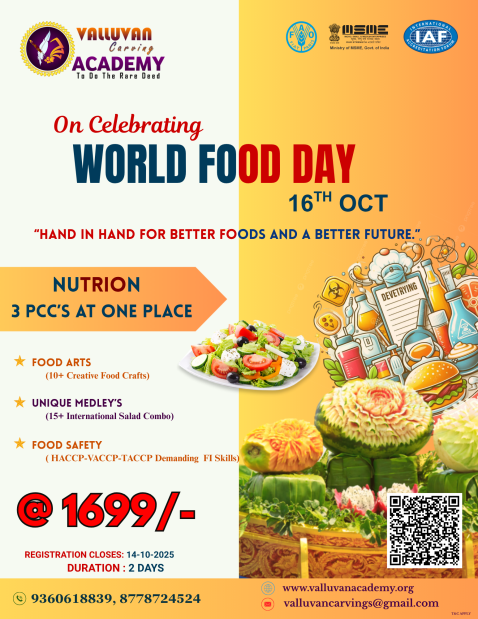
The theme for this year, “Hand in Hand for Better Foods and a Better Future,” highlights the FAO’s Hand-in-Hand Initiative, which fosters evidence-driven, country-led partnerships aimed at transforming agri-food systems and strengthening food security.
FAO World Food Day 1981 3pc Set Silver
Since 1981, World Food Day has adopted a different theme each year in order to highlight areas needed for action and provide a common focus. FAO issued World Food Day medals each year to commemorate and promote the anniversary.
Most of the themes revolve around agriculture because only investment in agriculture – together with support for education and health – will turn this situation around.
In spite of the importance of agriculture as the driving force in the economies of many developing countries, this vital sector is frequently starved of investment. In particular, foreign aid to agriculture has shown marked declines over the past 20 years.
Concept of World Food Day
WORLD FOOD DAY — INTERNATIONAL DAYS. PURPOSE:
The United Nations Food and Agriculture Organization (FAO) designated 16 October as World Food Day in 1979. The aim of the day is to promote global awareness and action for those who suffer from hunger, and to highlight the need to ensure healthy diets for all.
Who founded Food Day
Food Day in the United States is celebrated annually on October 24 and often throughout the month. The celebration was started in 1975 by the Center for Science in the Public Interest (CSPI) in an attempt to create an event similar to Earth Day.
Who created World Food Day
The United Nations created World Food Day in 1979, and the first global commemoration occurred in 1981. The occasion has been observed in Albuquerque for at least the last couple of decades.
What is the national dish of India
However, Khichdi is widely considered the unofficial national dish due to its popularity, versatility, and cultural significance across various regions of India. Other dishes like Dal Chawal, Biryani, and Puri Sabzi are also widely enjoyed and could be considered contenders.
What is the aim of World Food Day
heighten public awareness of the problem of hunger in the world; promote the transfer of technologies to the developing world; and. strengthen international and national solidarity in the struggle against hunger, malnutrition and poverty and draw attention to achievements in food and agricultural development.
What is the purpose of the FAO
The Food and Agriculture Organization (FAO) is a specialized agency of the United Nations leading international efforts to defeat hunger. FAO’s goal is to achieve food and security for all and make sure that people have regular access to enough high-quality food and lead active, healthy lives.
How is the FAO funded
FAO’s overall programme of work is funded by assessed and voluntary contributions. Member countries’ assessed contributions comprise the regular budget, set at the biennial FAO Conference.
FAO organization of food
FAO supports governments and partners to design the right policies and programmes to end hunger, promote food security and promote sustainable agriculture for millions of people around the world. FAO works with governments and partners to empower some of the world’s most marginalized people to end rural poverty.
ON CELEBRATION OF WORLD FOOD DAY
“The true work of art is but a shadow of the divine perfection.” Here are few food arts assembled by our students of Valluvan Carving Academy, Coimbatore, Tamil Nadu, India.
INTERNATIONAL SALAD – GARDEMANGER
OUR OATH
MS. KALAIARASI.R., MSc.,NET.,
valluvancarvingacademydigital
“Our actions are our future—let’s work together for healthy diets and a zero-hunger world,” or “Safe food today for a healthy tomorrow, where every meal nourishes and no one is left behind,” “Food is a basic human right, and ensuring its safety and accessibility is a collective responsibility. By working together to combat hunger and promoting healthy eating, we can build stronger and healthier communities”.